Releasing an internal SaaS platform without interrupting users
An operations team can stay on its platform during releases. A separate cleanup reduced disk usage on the development server from 90% to 29%.
- Built by
- Forhad
- Date
- Stack
- Docker · GitHub Actions · AWS · PostgreSQL · Grafana
The client’s problem
The business ran its day-to-day work on an internal platform. Each release built the application directly on its servers, putting users’ access at risk while a new version was prepared.
What we built
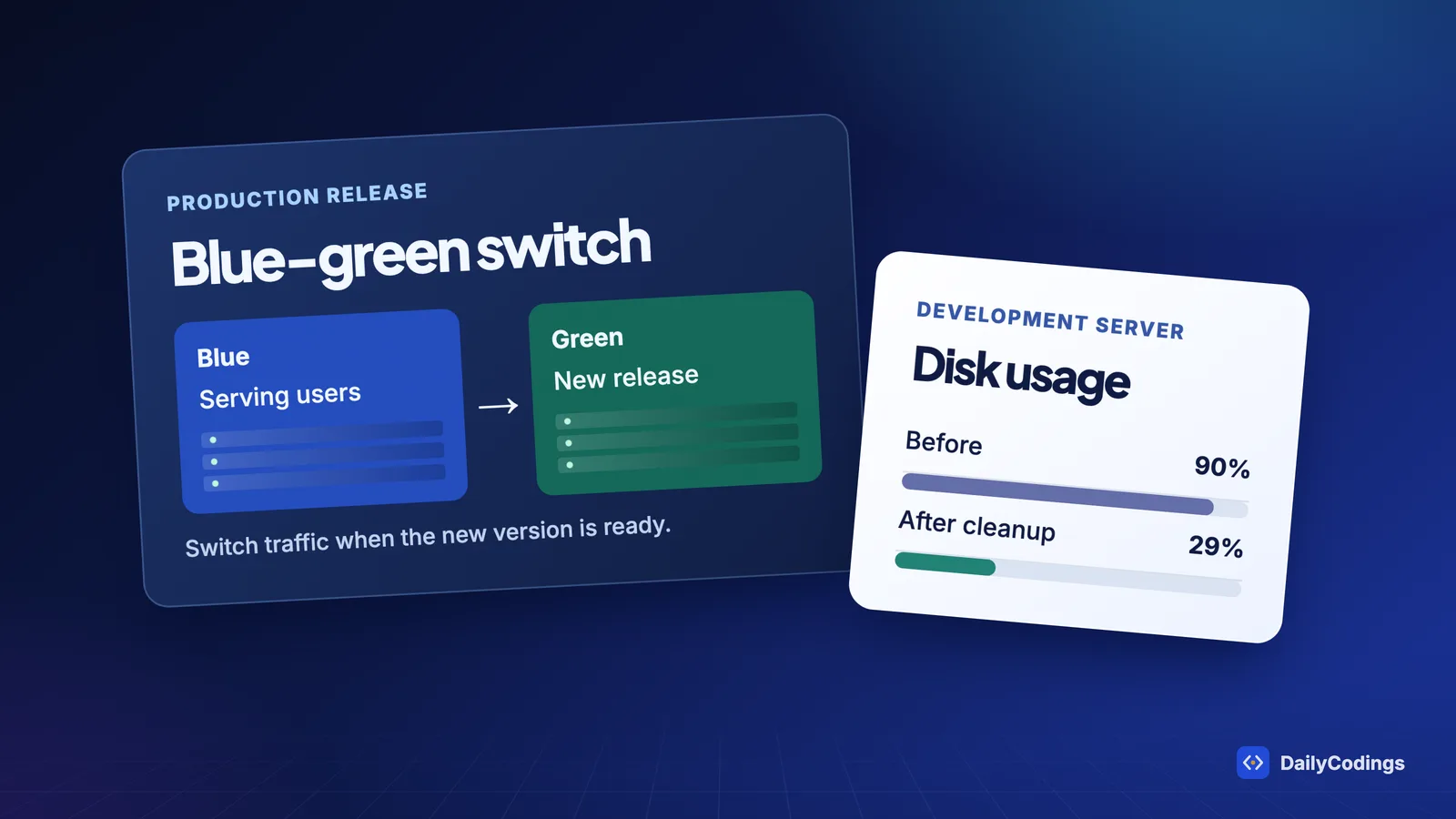
Forhad moved builds to GitHub Actions and set up two copies of the application for deployment. The existing version serves users while the replacement is brought up and made ready to take traffic.
Results
The team can release the frontend and backend without downtime during the switch. Keeping only recent images also brought disk usage on the development server down from 90% to 29%.
What changes for the people using the platform
Previously a release needed the application server to build the new version. Now the build runs separately, and the server downloads a ready-made copy. The old version keeps serving users until traffic moves to the new one. The same release pattern covers both the user interface and the backend it depends on.
Development and production have separate environments so the team can test a release before sending it to the people who use the platform for work. Forhad also wrote a release guide and testing playbook for the engineers who run those deployments.
What the team learned from incidents
Old application images had filled the development server to 90% of capacity. Keeping only recent images brought usage down to 29%, leaving room for subsequent builds.
Other incidents needed different fixes. Containers were configured to restart after a server reboot, and the team addressed failed deployments involving dependency files and partially applied database changes. Central logs and monitoring gave operators a place to check the platform’s health after a release.