Data Engineering
Reporting on client work across Monday.com boards
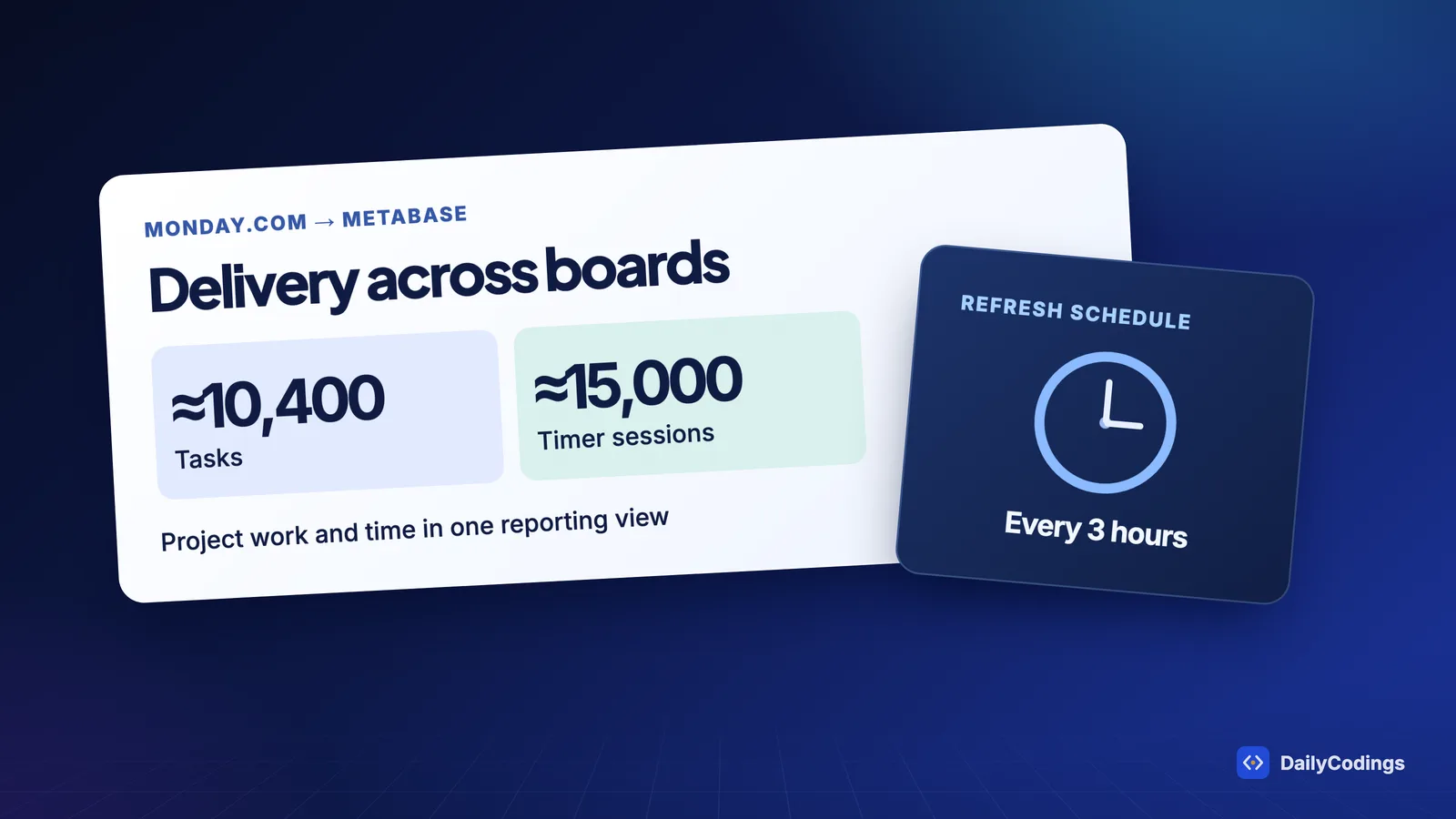
Agency leaders can review about 10,400 tasks and 15,000 time entries across boards in dashboards that refresh every three hours.
AWS Lambda · PostgreSQL · Monday.com API
Turn inconsistent source files into repeatable imports. Review field mappings, duplicate rules and rejected rows before the cleaned data reaches its destination.
Two suppliers may use different units, date formats or names for the same item. We map those differences into a target schema and agree which values can be corrected automatically.
Run a small batch with deliberate duplicates and missing fields. The output includes accepted records, a separate exception list and counts you can reconcile with the input. A repeat run should handle the same file predictably.
Need to design a pipeline across several systems?Why DailyCodings
Validation rules catch missing, duplicate, and malformed records before they reach your reports.
Daily or hourly runs keep reporting tables current without manual exports.
Documented transformations make every number explainable and easy to audit.
How we work
We learn how your team works today and the result you need.
You get a written scope, approach, and timeline before we build.
We ship working software early and show progress as we go.
We check the system against your real data and edge cases.
Handover, documentation, and help after launch.
Related work
Agency leaders can review about 10,400 tasks and 15,000 time entries across boards in dashboards that refresh every three hours.
AWS Lambda · PostgreSQL · Monday.com API
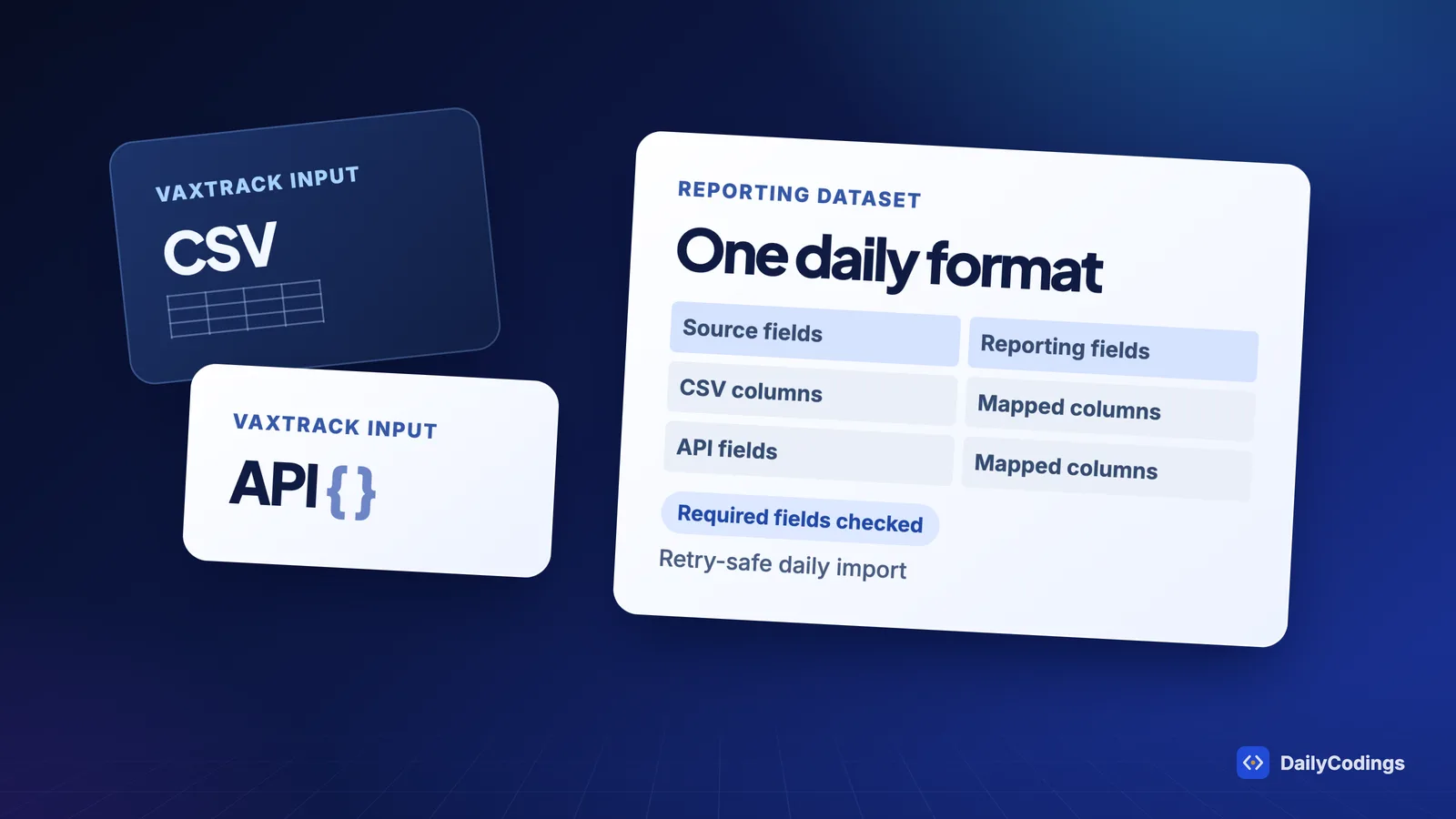
VaxTrack’s reporting team gets a consistent daily vaccine dataset from CSV files and API feeds, with fewer manual corrections when incoming data changes.
Python · ETL · Data Quality
Further reading

4 min read
Compare $120 to clean one file with $660 for a year of repeat deliveries in a worked ETL budget. Price exceptions, failed matches and reconciliation.
5 min read
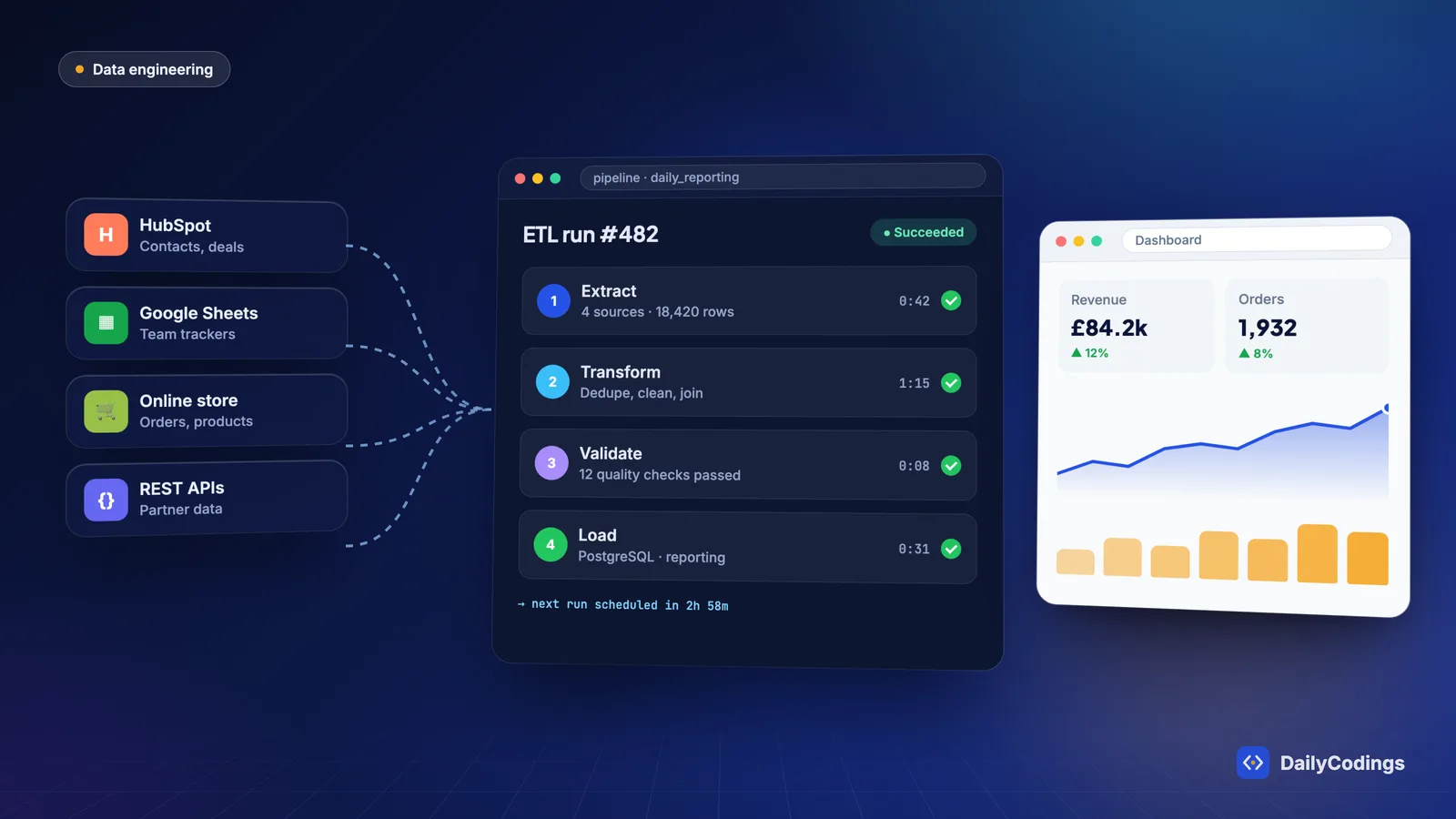
What data engineering is, why it matters for growing businesses, the signs you need it, and how a simple data pipeline turns scattered spreadsheets and apps into reports you can trust.
FAQ
Don't see your question here? Ask us directly and we'll answer it.
ETL stands for extract, transform, load: pulling data from source systems, cleaning and reshaping it, and loading it into a database, warehouse, or tool where it can be used.
Yes. We can run a one-off cleanup to de-duplicate and standardize historical data, then put a pipeline in place so it stays clean.
As often as you need, from once a day to every few minutes, depending on how fresh the data must be and the limits of the source systems.
Share the file formats, desired output and examples of errors using sample or anonymized rows.