How a sales team researched roughly 540 firms overnight
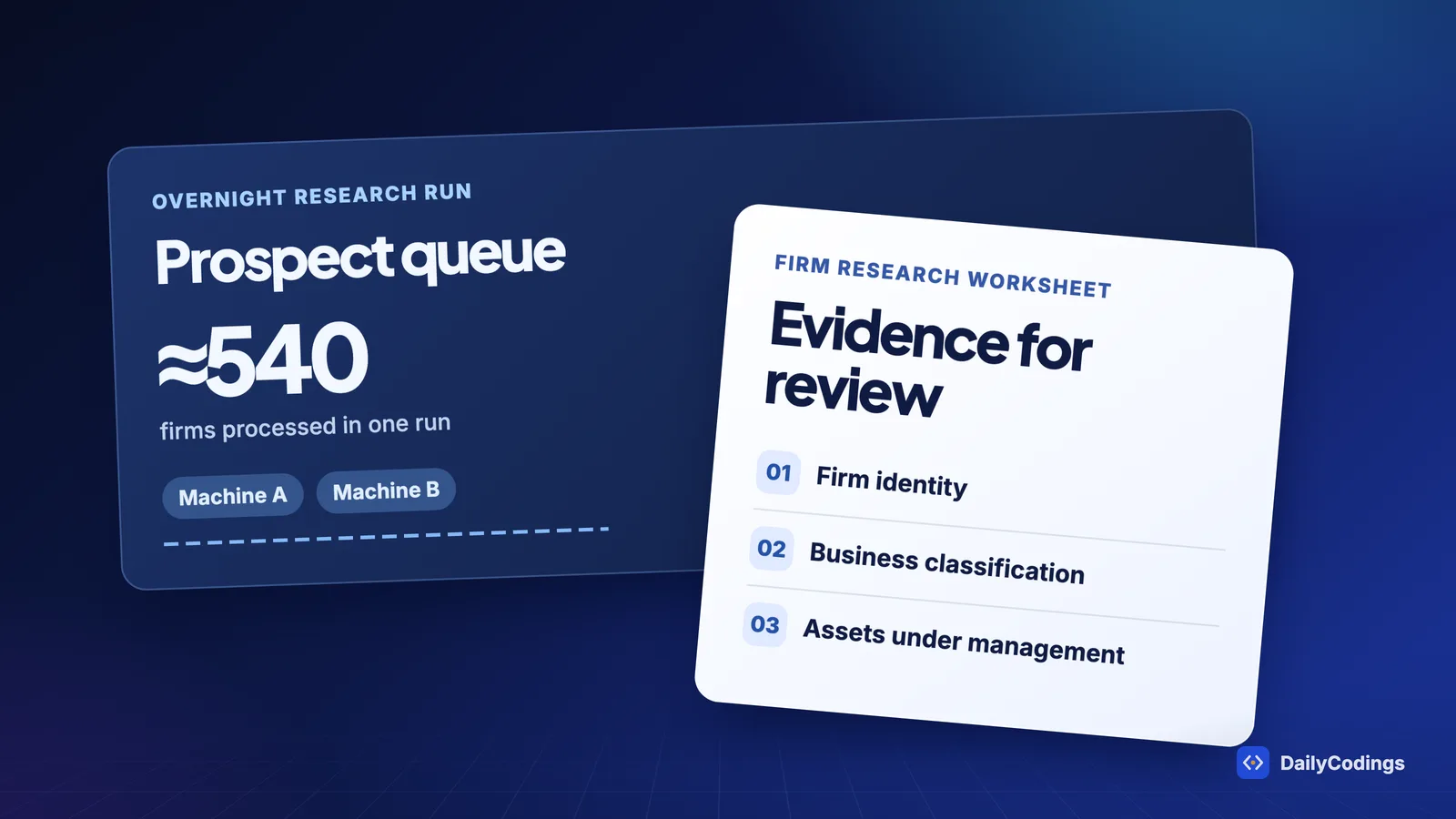
A fund research team processed roughly 540 firms overnight on two machines and could review the evidence behind a proposed change before updating its sales sheet.
Node.js · OpenAI · MongoDB
Turn public directories and business websites into traceable records. Scope a one-time extract or a scheduled feed with cleaning, enrichment and CRM delivery.
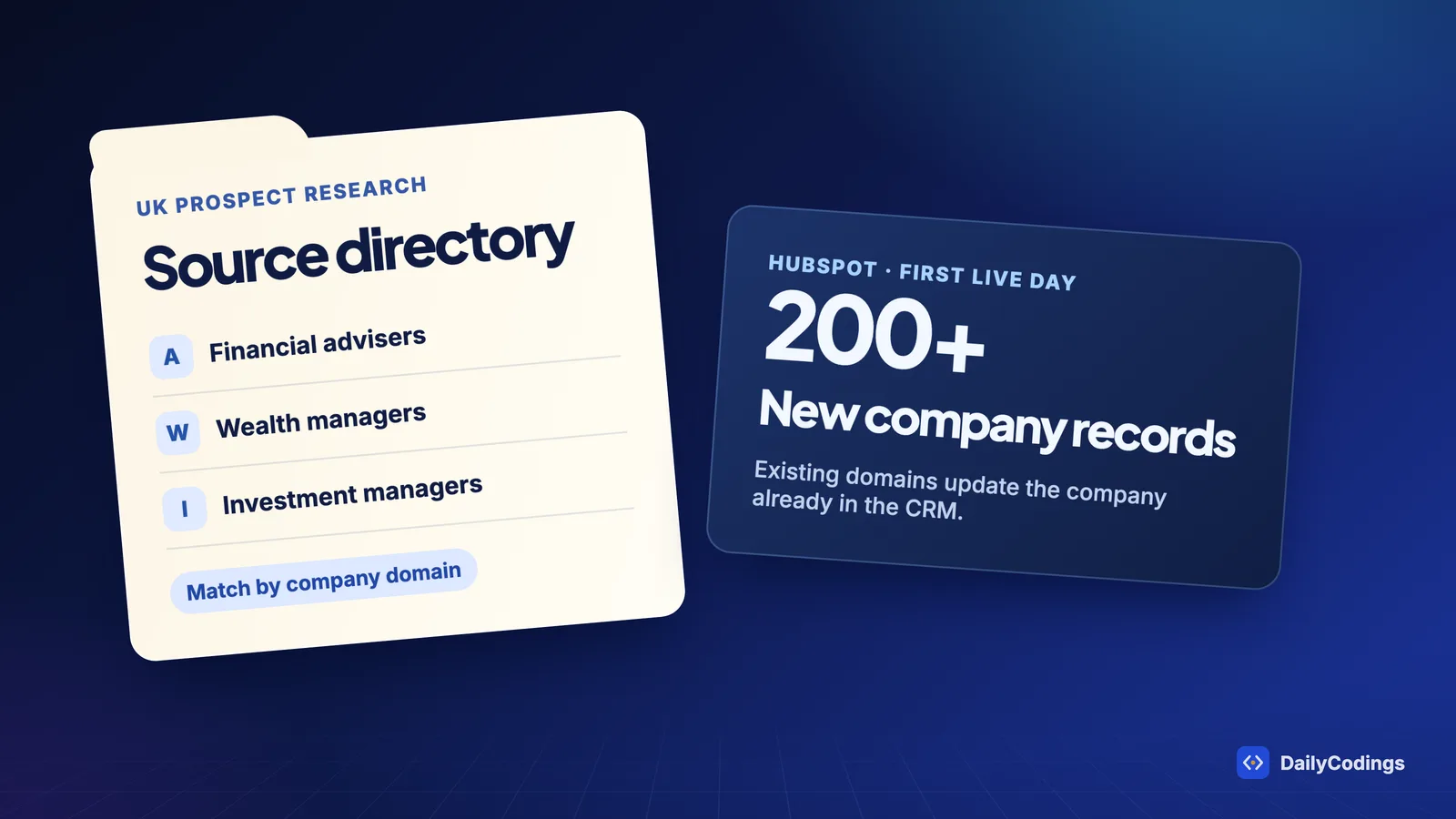
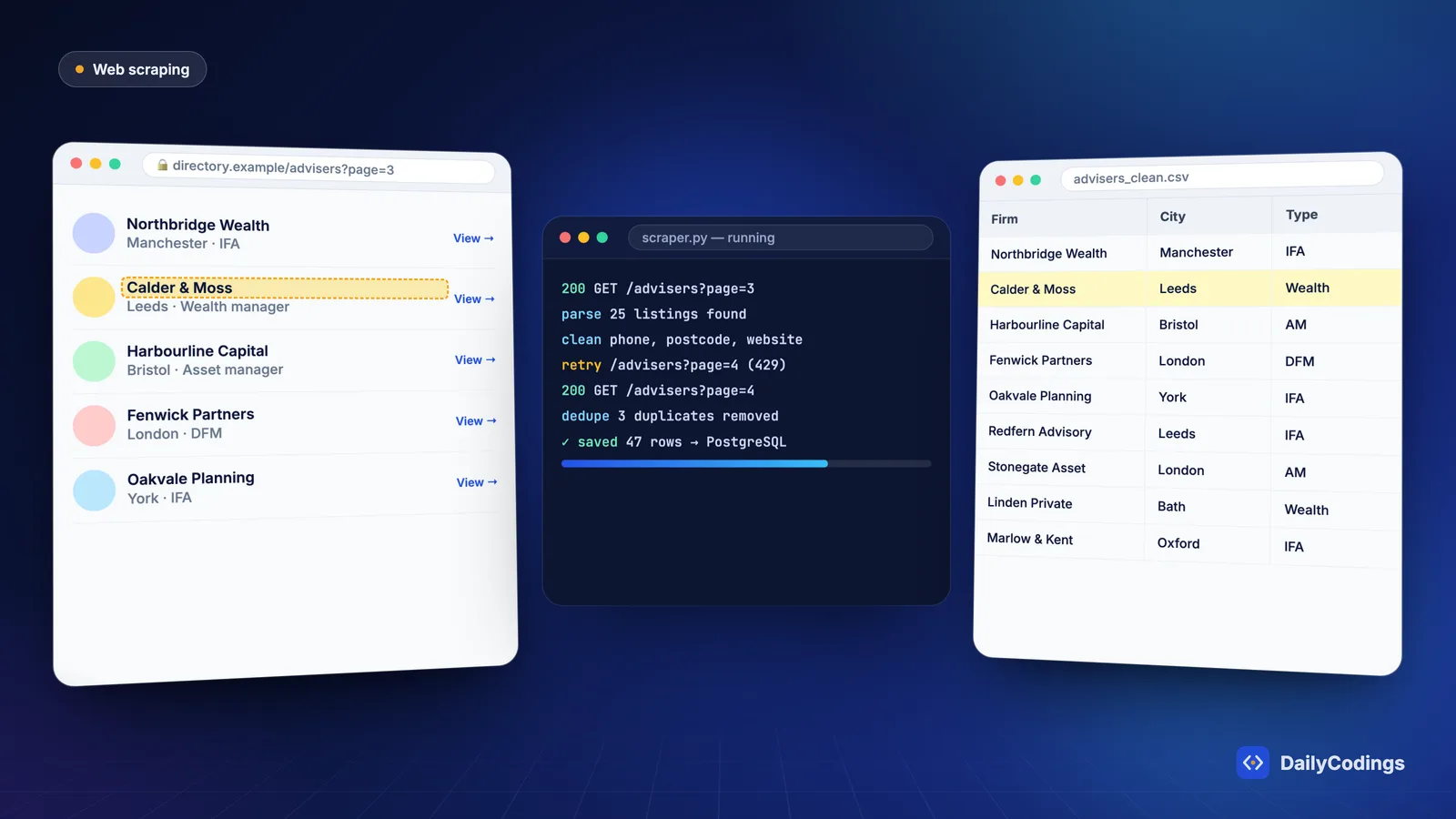
An example row for a directory project includes the company name, domain, region, source URL, date checked and review status. If the source omits a field, the row can carry that gap into review. A domain match lets us update an existing CRM company safely.
For a UK financial-services project, our scripts created more than 200 HubSpot records on the first live day after testing. In a later enrichment project, one overnight run on two machines processed roughly 540 firms. The projects illustrate different parts of the collection and enrichment process.
A one-time extract starts with sample records you can review. A managed feed also needs a refresh schedule and an agreed response when a source changes its layout or drops a field.
Already have a list of companies to enrich?Why DailyCodings
Per-source adapters and monitoring mean a site redesign is a quick fix, not a full rebuild.
You receive consistent, de-duplicated data ready for analysis or import.
Daily or weekly runs keep your datasets current without anyone pressing a button.
How we work
We learn how your team works today and the result you need.
You get a written scope, approach, and timeline before we build.
We ship working software early and show progress as we go.
We check the system against your real data and edge cases.
Handover, documentation, and help after launch.
Further reading

7 min read
Compare a $250–$400 one-site scraper with a dataset or managed feed. Model first-year cost, staff time and the price per usable record before commissioning a build.

6 min read
Most web scrapers break within weeks. These seven patterns, from per-source adapters to validation and quality monitoring, keep scraping pipelines reliable when websites change.
FAQ
Don't see your question here? Ask us directly and we'll answer it.
Collecting publicly available data is generally lawful, but it depends on the site's terms, the type of data, and where you operate. We avoid personal data unless there is a clear lawful basis, respect rate limits, and will tell you if a request looks risky.
Our quality checks detect when a source starts returning unexpected data and alert us. With a maintenance plan, we update the affected adapter quickly so your data keeps flowing.
Whatever suits your team: CSV or Excel files, a Google Sheet, a database table, an API, or direct import into a CRM like HubSpot.
Share one or two public source URLs, the fields you need, the destination and how often the records should refresh.