Skip to content
WordPress speed rescue and Gutenberg migration

WordPress speed optimization for slow, builder-heavy sites

Find what slows your WordPress site, test repairs on staging and see when moving Elementor layouts into editable Gutenberg blocks is worth the work.

Decide whether to repair the page or rebuild its template

Start with one slow mobile URL and the action visitors struggle to complete. Check server response, images, scripts and plugin behavior on that template. A slow hero image may need a smaller asset and a different loading strategy. It seldom needs a new editor.

If the page builder is the constraint, rebuild one representative Elementor layout using native or custom Gutenberg blocks on staging. Ask an editor to change the headline and image, then check mobile layout, links, the inquiry form and analytics.

Compare the before-and-after measurements under the same test conditions. Report any available real-user Core Web Vitals separately. Review the pilot and the rollback plan together before extending the changes to more templates.

Planning a new WordPress theme or a publishing feature?

What you get

  • Performance baseline for representative URLs
  • Staged repairs or a pilot block template
  • Before-and-after checks and rollback instructions

Typical use cases

  • Investigating slow WordPress landing pages
  • Reducing builder overhead on a key template
  • Moving an Elementor layout to editable Gutenberg blocks

Why work with us on WordPress speed rescue and Gutenberg migration

  • A diagnosis tied to one URL

    Identify whether hosting, an oversized asset, a script or the template is responsible for the delay.

  • An editor-tested pilot

    Let the publishing team update real content in the proposed blocks before wider migration.

  • Comparable measurements

    Repeat lab tests under the same conditions and check the customer journeys the template supports.

Tools and technologies we use

  • WordPress
  • Gutenberg
  • Elementor
  • PageSpeed Insights
  • Lighthouse
  • Search Console

A clear process from first call to launch

  1. 1

    Discover

    We learn how your team works today and the result you need.

  2. 2

    Plan

    You get a written scope, approach, and timeline before we build.

  3. 3

    Build

    We ship working software early and show progress as we go.

  4. 4

    Test

    We check the system against your real data and edge cases.

  5. 5

    Deliver and support

    Handover, documentation, and help after launch.

Guides and insights

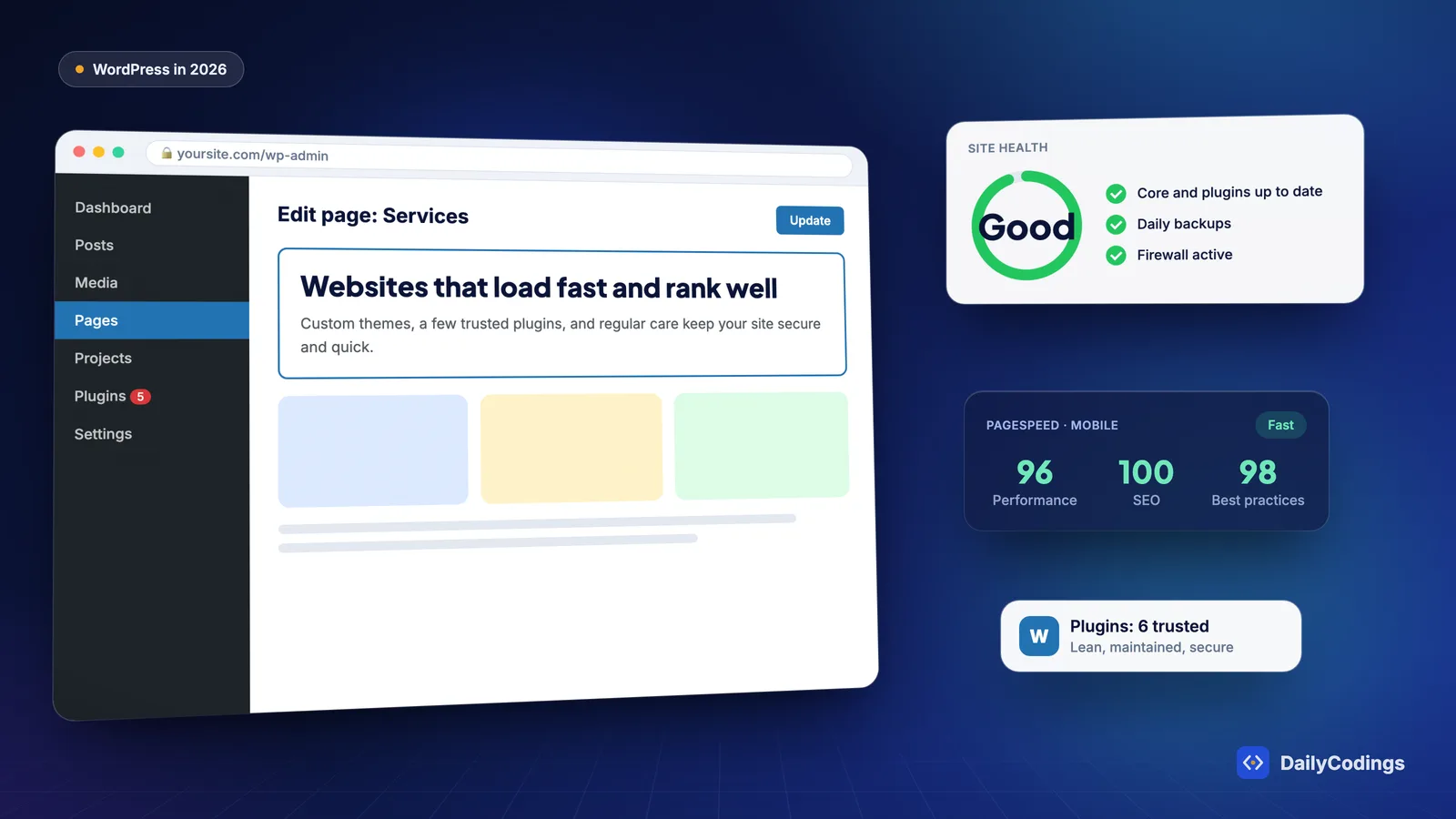
  • WordPress admin editing a services page, with site health, PageSpeed scores, and a short list of trusted plugins

    6 min read

    Is WordPress Dying? The Problems, the Strengths, and How to Do It Right

    WordPress still powers a huge share of the web, yet many people say it is slow, insecure, and outdated. Here is an honest look at what is wrong with WordPress, what is still great about it, and how we build WordPress sites that stay fast and secure.

    • WordPress
    • Website Design
    • Web Development
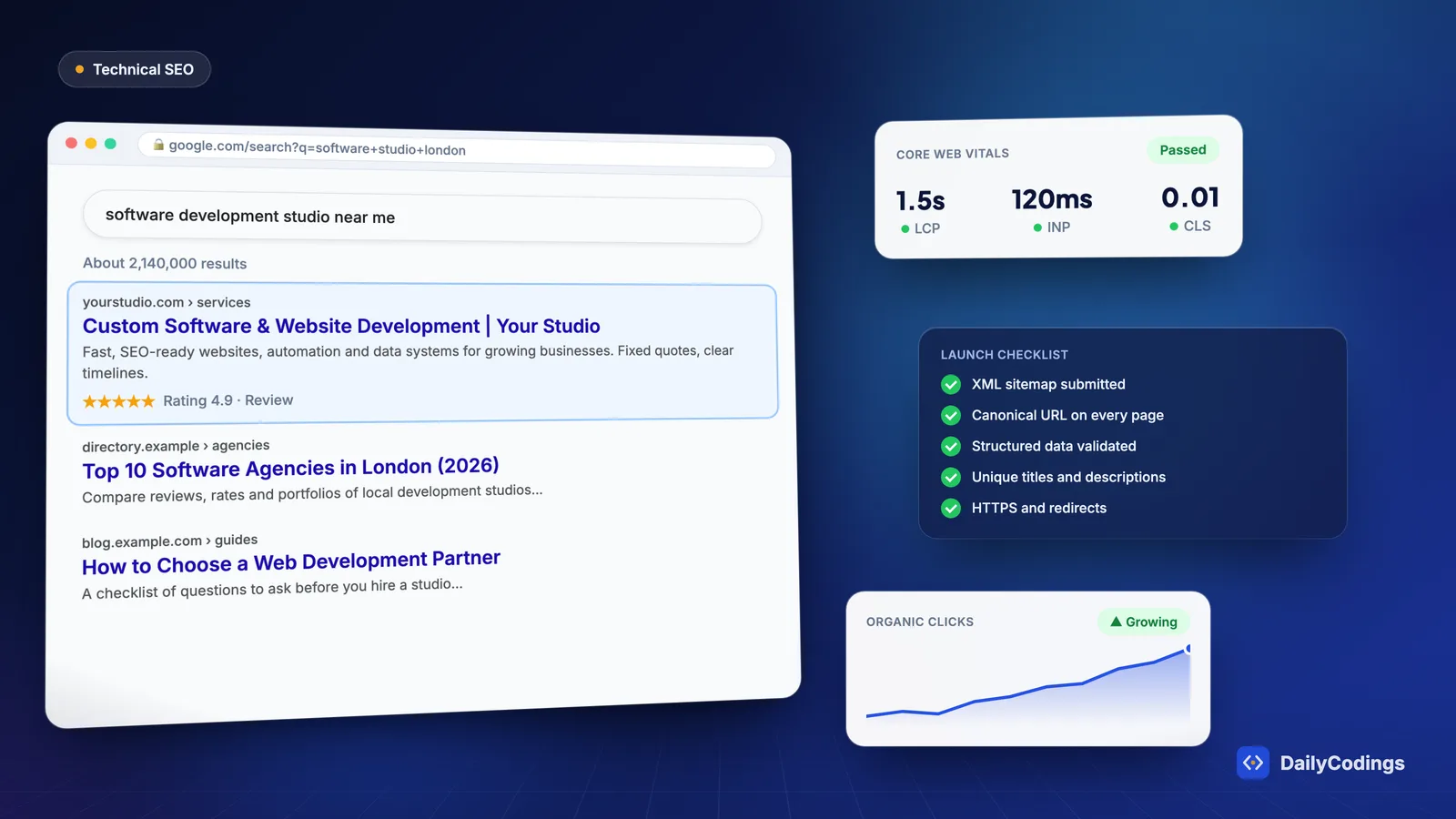
  • Google search results with the top result highlighted, Core Web Vitals scores, a technical SEO checklist, and rising organic clicks

    6 min read

    Technical SEO Checklist for a New Business Website

    A practical technical SEO checklist for launching a new business website: crawling, indexing, metadata, structured data, Core Web Vitals, and the setup steps most sites skip.

    • SEO
    • Web Development
    • Website Design

WordPress speed rescue and Gutenberg migration: common questions

Don't see your question here? Ask us directly and we'll answer it.

Do we have to remove Elementor to improve speed?

Often a targeted fix is enough. We test the slow template first. If the builder remains the main constraint, you can review a single Gutenberg pilot before committing to more work.

Can our editors keep the design and change the content?

We map the existing layout and build the pilot on staging. An editor tests text, images, reusable sections and mobile previews. Forms and tracking are included in the acceptance checks.

What can you measure on a low-traffic site?

Repeatable lab tests show what changed under the chosen conditions. If comparable real-user data is available, we report it separately and explain the period it covers.

Tell us about your project

Share one affected URL, the current theme or builder and the visitor action you most want to improve.